Our Location
5th Floor, Huake Center, Lanshan District, Linyi City, Shandong Province, China

5th Floor, Huake Center, Lanshan District, Linyi City, Shandong Province, China
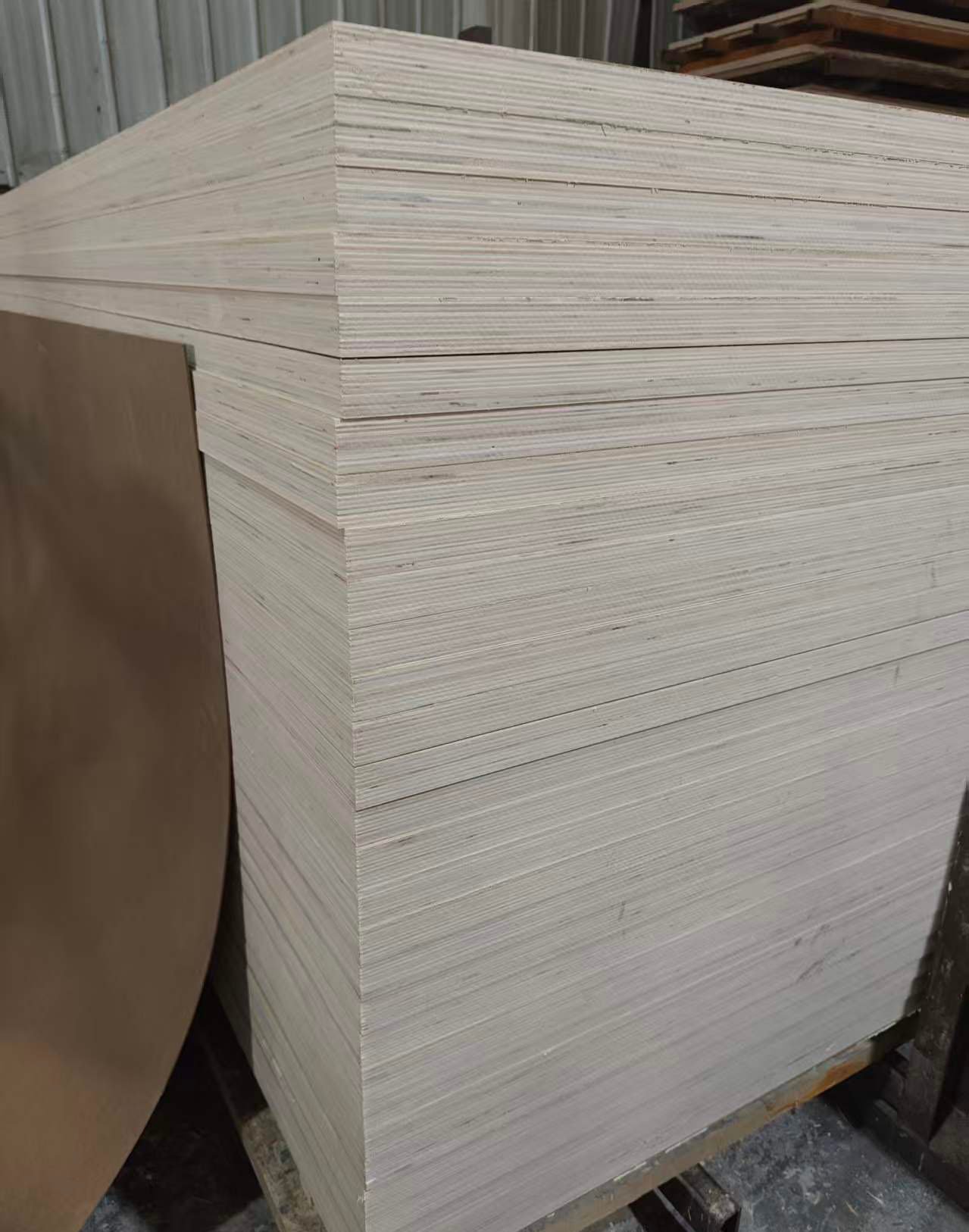
Moisture resistant plywood fills the gap between dry interior sheets and fully weatherproof exterior panels, serving kitchens, bathrooms, and ventilated indoor spaces that see dampness rather than soaked exposure. This guide explains what the MR label means on a stamp, the spaces it serves well, and the spec changes that move a job up to exterior or film faced panels. Use it before ordering panels for any space that mixes wood with water.
MR stands for moisture resistant, and that word carries a specific promise: the adhesive tolerates damp indoor service but the panel stays out of direct weather and permanent wetness. Reading that boundary correctly stops most premature failures in fit-out work.
An MR plywood panel uses a moisture-resistant adhesive that survives the damp cycles of normal indoor life, from bathroom humidity to the occasional spill in a kitchen. It returns better edge behavior than interior sheet goods without committing to the cost of a fully weatherproof exterior bond.
The adhesive chemistry explains the balance. Melamine-modified resins in MR panels hold firm through repeated humidity swings that defeat plain interior glues, yet they run cheaper than the phenolic systems that exterior and marine grades demand, which is why fit-out buyers land on MR for most wet-room panels.
The bond ladder runs interior, moisture-resistant, exterior, and marine, and each rung adds adhesive performance plus cost. MR earns its place in rooms where humidity rises and falls, while exterior panels serve rain, condensation, and wet processes that MR would not survive.
Kitchen cabinets, bathroom vanities, laundry fittings, and air-conditioned interiors all reward MR panels, because normal ventilation clears the moisture before it attacks the glue line. The panel handles the damp, and the room handles the moisture.
Ventilation decides whether MR panels earn their keep. A panel in a bathroom with an extractor sees short damp cycles that the MR bond clears, while a sealed, unventilated alcove traps the moisture against the veneer and slowly breaks any bond, so the room design and the panel grade work as one system.
Buyers meet MR beside exterior and film faced panels and need the boundary clear before the order leaves.
| Panel | Bond class | Duty | Price order |
|---|---|---|---|
| Moisture resistant plywood | MR bond | Damp indoor rooms | Mid |
| Exterior plywood | Weatherproof bond | Rain and outdoor service | High |
| Film faced panel | Weatherproof plus film | Concrete formwork and wet pours | High |
| Interior panel | Dry bond | Furniture and dry rooms | Low |
MR holds the middle rung, and the floor of the choice stays dry. Where surface moisture and spills are a real threat rather than a possibility, the spec should climb to exterior bond, and where the panel must survive standing wetness or repeated pours, film faced panels take over.
The price gradient follows the same ladder, so overspecifying costs real money across a whole fit-out. A buyer who matches the room exposure to the bond class carries the tightest possible umbrella while keeping the panel bill honest.
The MR family earns its keep across fit-out and furniture markets that expect a little humidity every day.
Installations still need edge sealing and reasonable airflow, because even an MR panel fights a losing battle against standing water and trapped moisture. The panel gives the room a head start; the detailing finishes the job.
Fit-out programs cut MR panels in volume, and the fabrication order should list the bond class, the face grade, and the edge treatment alongside the panel sizes. Shops that receive a clear MR schedule cut, bore, and seal decisively, while a vague panel list produces edges that defeat the grade.
Showers, exterior soffits, plant rooms, and anything in permanent dampness need a tougher visitor. An MR panel misused in those spots delaminates or swells while an exterior or film faced version would carry the duty, so the boundary belongs in the drawing, not the storage room.
Buyers compare MR plywood against moisture-resistant fiber and chip boards, and the core material still decides the performance.
Commercial Plywood in an MR bond carries cabinets and joinery with full veneer stiffness, while Film Faced Plywood pushes the same core into wet formwork duty. Where the surface rules the room, Melamine Plywood finishes furniture in one step, and MDF Board in an MR line suits painted profiles that stay out of standing water. The honest spec names both the face and the bond class, because the two together hold the panel together in service.
Most MR failures come from the edges, where raw veneer sips moisture into the core. State edge sealing in the fabrication order, and CNC the panel with clean, tight cuts so the sealer reaches the fiber evenly on every panel.
Drilled holes and hinge mortises deserve the same attention. Every fastener penetration reopens the moisture path, so seal fixings and keep a compatible edge paint in the assembly kit when the panel serves a wet room.
Ordering MR panels runs on the same discipline as any grade, with the moisture class written on the contract.
Add the acceptance rule beside the spec, then compare delivered sheets against the stamp and the data sheet. A written tolerance on thickness and bow turns the arrival check into a repeatable step instead of a debate.
Store a graded sample from the production batch beside the contract, then measure the delivery against it. The sample also shows the face quality and edge finish the mill intends to reproduce, which catches substitutions before the container empties.
MR panels arrive ready for damp rooms, and the way they sit before installation protects that readiness.
Suppliers such as HYY state the bond class, edge sealing, and moisture range on the export contract, so the MR panels you approve match the panels the fit-out crew installs.
The moisture range matters most for joinery. Panels that arrive dry and condition evenly into the room cut, glue, and stay flat through the assembly, while a panel that lands wet moves during the build and wrecks careful joints.
Is moisture resistant plywood waterproof? No, MR means the adhesive tolerates damp indoor cycles, not standing water or weather, so exterior or film faced panels cover wet exposure.
What is MR grade plywood used for? Kitchen cabinets, bathroom vanities, laundry fittings, and humid interior joinery all use MR panels where ventilation clears the moisture.
What is the difference between MR and exterior plywood? Exterior plywood carries a fully weatherproof bond for rain and soaked service, while MR serves damp indoor rooms at a lower cost.
Can moisture resistant plywood be used in bathrooms? Yes, for vanities and cabinets in ventilated bathrooms, with edge sealing and careful detailing, while shower enclosures themselves need exterior or marine-grade construction.
How can I tell MR plywood from standard plywood? Check the stamp for the bond class, because MR and interior sheets can look identical on the face; the printed bond class and the data sheet confirm the difference.
Does moisture resistant plywood swell at cut edges? Less than standard panels, but no wood product ignores water, so seal every cut edge and drilled hole in wet rooms to keep the core dry and the panel square.
Is moisture resistant plywood suitable for kitchen worktops? With a sealed surface and laminated finish it serves worktop cores well, but the face overlay must block spills, because the MR bond protects the glue line rather than the raw wood face.
How does MR plywood compare with marine grade? Marine grade adds a fully waterproof bond and strict veneer limits for immersion and boats, while MR serves damp interior rooms at a substantially lower price.