Our Location
5th Floor, Huake Center, Lanshan District, Linyi City, Shandong Province, China

5th Floor, Huake Center, Lanshan District, Linyi City, Shandong Province, China
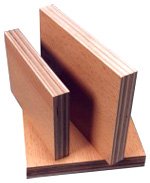
A plywood yacht is a boat built from marine-grade plywood panels, shaped into a hull and a deck and protected by glass, epoxy, and paint. The layered panel gives a stiff, light, and fast-to-build hull, and the marine grade keeps the structure sound in the water it is made for.
Building a plywood yacht comes down to the panel grade, the construction method, and the sealing, because a hull that uses the wrong bond or skips the protection fails at the waterline long before the rest of the boat does.
Plywood brings strength, stiffness, and light weight to a hull in a way solid timber cannot match for the same thickness. The cross-lamination spreads the load in two directions, so a thin panel carries the hull’s stresses without a heavy frame behind it.
The large panel also builds a hull quickly. A sheet spans a whole strake or a whole panel of the bottom, which cuts the number of joints and the time a build takes compared with plank-on-frame construction.
The material is also predictable and repairable. A plywood hull takes a patch or a new panel cleanly, and a damaged section can be cut out and replaced without rebuilding the whole boat.
A solid timber hull is traditional and beautiful, but it moves with moisture and needs a heavy frame to hold its shape. A plywood hull stays stable, needs less framing, and builds far faster, which suits a home builder or a small yard.
The plywood hull does trade some of the solid timber’s feel and its repairability in traditional terms, but for a modern build the panel’s stiffness and speed outweigh that trade for most owners.
The panel is only a marine panel when it carries the right bond and the right veneers. A true marine plywood uses a waterproof glue line, void-free inner veneers, and a durable face species, and each of those matters to a hull that lives in water.
The glue line is the first requirement. A WBP or an equivalent waterproof bond holds the layers together even when the panel is soaked, while an interior bond fails and the hull delaminates.
The veneers come next. A marine panel grades out the voids and the weak spots that would trap water or crack under stress, so the hull has no hidden defect waiting at the worst moment.
A void-free core resists the water that would collect in a gap and start the rot. Manufacturers grade a good marine panel to remove those gaps, which a general construction panel does not guarantee.
The face species follows the build. A durable hardwood face takes the glass and the paint that protect the hull, while a softer face suits a painted interior where the panel is hidden.
A few methods dominate home and small-yard builds. Stitch-and-glue joins panels with wire stitches and fillets of epoxy, cold moulding layers thin veneers over a mould, and a sheet-ply hull uses panels over frames and stringers.
Stitch-and-glue suits a first build because it needs no heavy jig and the seams fill with epoxy to make a strong, light hull. Cold moulding gives a smooth, curved shape with thin layers, and a sheet-ply hull gives a simple, robust structure for a working boat.
The method sets the panel thickness and the amount of framing. A stitch-and-glue hull uses a slightly thicker panel and relies on the glass for strength, while a framed hull uses a thinner skin over a stronger frame.
Stitch-and-glue is fast and forgiving, and it produces a fair hull with a smooth, glassed finish. Cold moulding produces an even smoother, stronger hull at the cost of more time and skill.
A sheet-ply hull is the most robust for a utility boat, using flat panels over a frame that takes the knocks of everyday use. Each method suits a different builder, budget, and use.
The frame gives the hull its shape and carries the load the panel cannot. Frames, stringers, and a keel set the panel’s lines, and the joints between the panel and the frame carry the hull’s stresses to the structure.
The maker screws and glues the panel to the frame, so the joint is both mechanical and chemical. A glued and fastened joint spreads the load and stops the panel from working loose as the hull flexes on the water.
The transom, the deck, and the bulkheads complete the structure. Each ties the hull together, and each needs the same sealed, glued, and fastened detail the rest of the boat uses.
A joint that is only screwed can loosen as the hull moves, while a joint that is only glued depends on a perfect surface. Gluing and fastening together gives a joint that holds even when one method weakens.
Seal and glue every frame-to-panel contact so no water path remains. A dry joint between a frame and a panel is where rot begins, hidden from view until the hull softens.
Protection turns a plywood hull into a lasting one. Epoxy seals the panel against water, glass cloth adds abrasion resistance, and paint or varnish shields the epoxy from sunlight and wear.
Sheathing with epoxy and glass is standard on a plywood hull because it stops the water that would otherwise reach the veneers. The glass takes the knocks, and the epoxy blocks the moisture, so the panel stays dry behind them.
Seal every edge and every fixing before it is covered. The end grain of a panel wicks water fastest, so a sealed edge is the detail that keeps the hull sound at the points water reaches first.
Epoxy is the base layer, glass the reinforcement, and paint or a UV varnish the top coat. Each layer has a job, and skipping any one leaves the hull exposed to a threat the others were meant to stop.
Coating the inside of the hull matters as much as the outside. Condensation and bilge water reach the inner faces, so the inner skin needs the same sealing the outer skin receives.
A plywood yacht needs a periodic check and a little upkeep. Inspect the sheathing for cracks, the joints for movement, and the coatings for wear, and repair the small faults before water reaches the panel.
Keep the hull dry when it is out of the water, and cover it so rain does not sit on the deck. Standing water finds every weak seal, so a cover and a dry berth extend the hull’s life.
Touch up the paint and the varnish on schedule. A fresh coat before the old one fails keeps the epoxy and the glass protected, and the whole hull lasts far longer than one left exposed.
A small crack in the sheathing sands out and re-glasses, while a soft panel is cut out and replaced with a new piece bedded in epoxy. A repair that matches the original build restores the hull to full strength.
Dry the area before the repair, because epoxy over a damp panel traps the moisture the repair was meant to exclude. A dry, clean surface is what makes the patch bond and last.
The hull demands a panel rated for water and stress. Film Faced Plywood brings a tough, sealed face that suits a working boat deck, while Commercial Plywood serves the interior joinery and the cabin fit-out. Melamine Plywood finishes an interior surface, MDF Board shapes a painted interior panel, and Chip Board covers the budget tier for a dry, covered cabin part.
Suppliers such as HYY list the bond class and the thickness on the contract, so the builder can order a panel that carries the hull load and resists the water the yacht will meet.
Can you build a yacht from plywood? Yes. Marine-grade plywood over a frame, sheathed in epoxy and glass, builds a stiff, light hull that suits home and small-yard projects.
What plywood is used for boat building? A marine-grade panel with a waterproof bond and void-free veneers is the standard, chosen for its strength and its resistance to water.
What is stitch and glue boat building? It is a method that joins plywood panels with wire stitches and epoxy fillets, producing a strong, light hull without a heavy jig.
How long does a plywood boat last? With epoxy sheathing and regular coating, a plywood hull lasts for decades, provided the seals and the coatings are maintained.
Can you use normal plywood for a boat? Only where the panel stays dry and covered. A hull in the water needs a marine-grade bond and void-free veneers to survive.