Our Location
5th Floor, Huake Center, Lanshan District, Linyi City, Shandong Province, China

5th Floor, Huake Center, Lanshan District, Linyi City, Shandong Province, China
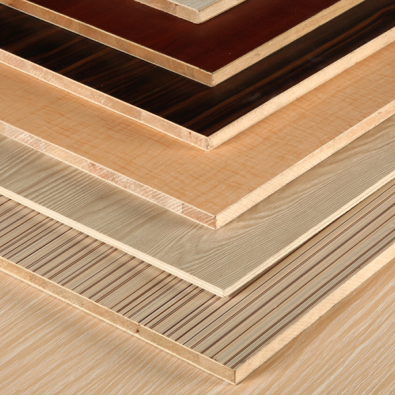
Plywood types divide into a small set of practical families no matter how many product names you see in a catalog. Face, glue class, and intended duty separate the grades buyers actually order, and the same families repeat across suppliers. This guide walks the main plywood types, the adjacent engineered panels, and the short decision path that turns a project need into a correct order.
Every plywood sheet shares the same core idea: thin wood layers bonded crosswise for stiffness. The type you choose changes the face, the adhesive, and the finish, which is why two panels that look alike can fit completely different jobs.
Suppliers sort plywood into families by the face treatment and the environment they serve, and most projects live in one of four groups. The grouping stays consistent across markets because each family solves the same structural or finishing problem, even when local grade names differ.
Commercial plywood covers floors, walls, roofs, packaging, and crates where a clean structural panel matters and the finish stays painted or hidden. It carries full veneer plies, a defined glue class, and a face good enough for general exposure, which makes it the default grade for most construction and industrial orders.
Export buyers often meet commercial plywood under names like sheathing, exterior, and grade-board, and the shortlist still points at the same product once glue class and thickness match. Comparing data sheets by bond class and ply count instead of product labels removes almost all confusion in cross-border sourcing.
Structural plywood adds a stamped stress or span rating that engineers can use in calculations. When a drawing names a span, a bond class, and a grade, the panel must carry that rating on its stamp, so project specifiers and price-driven buyers hold this type to a different standard.
Film faced plywood receives a smooth phenolic film on both faces and sealed edges, built to release concrete and survive repeated pours. The film weight and the core species decide how many uses the panel returns, which makes it a formwork cost decision as much as a panel choice.
Concrete contractors divide the same product by expected reuse because a forty-cycle panel changes the cost per pour completely. Confirm the film weight and the core species in the order, then calculate the price per use instead of the price per sheet when you compare quotes.
Marine and exterior plywood carry fully weatherproof bonds with strict veneer limits, suited to boats, exterior cladding, and outdoor furniture. The bond class and the void control set the price, and buyers should confirm the specific standard their market applies instead of relying on the word exterior alone.
Where the panel shows on the product, the face finishes the sale. Furniture and fit-out buyers choose overlays and veneers that sit on the same structural core.
Melamine faced boards laminate a decorative, scratch-resistant overlay onto a plywood or particle core, giving cabinets and shelves a clean edge-to-edge finish without painting. Melamine quality and core choice decide how the panel cuts, bores, and stays rigid in furniture assembly.
Furniture buyers debate the core as much as the overlay. A veneer plywood core under melamine stays stable and holds screw clamping for hinges, while a particle core trims the price for carcasses that never see heavy hardware, and the right call depends on the cabinet’s duty and hardware load.
Architectural projects order plywood with fine face veneers for exposed joinery, while painted panels take a machined face ready for direct coating. Each finish raises the face grade and the price, so matching the face to the visible surface keeps the budget honest.
Selection almost always starts with plywood versus the adjacent engineered panels, because the product family sets the strength, the price, and the edge behavior.
The comparison simplifies to a one-line rule: plywood carries loads and moisture, fiber and chip panels carry flat surfaces and low budgets. Kits and furniture that leave the panel surface visible still mix families inside one item, so the complete spec depends on where each piece sits in the build.
| Panel | Core construction | Best suited to | Trade-off |
|---|---|---|---|
| Commercial plywood | Cross-laminated veneers | Sheathing, crates, structure | Higher cost, strong and stiff |
| MDF | Densified wood fibers | Painted joinery, trim | Flat and machinable, weak edges under water |
| Chip board | Compressed wood chips | Budget furniture, wardrobes | Cheap and light, low screw and moisture tolerance |
| Melamine faced | Veneer or particle core plus overlay | Cabinets, fitted furniture | Quick finish, overlay can chip at cut edges |
MDF Board delivers the flat, paint-ready surface that joinery shops love, and Chip Board covers budget panel work where weight and cost beat strength. Where the structure bears load or the site gets wet, veneer-based plywood carries the duty and the other panels fall back to interiors.
Every plywood type carries a glue class that states how the panel survives moisture, and matching it to the environment prevents most early failures.
Read the bond class on the stamp, because a panel sold as exterior somewhere arrives marked differently in another market. Buyers who translate the local grade to the building’s exposure risk order fewer callbacks.
Face grades rank cosmetic quality from sanded paint-grade faces down to utility faces with knots and patches. Pick the face by where the panel shows, and keep premium faces for visible work while utility grades handle formwork and hidden structure.
Grade names vary by country, yet the stamp speaks a common language of bond class and agency. Ask the supplier to translate the local grade to the exposure and duty you need, and compare panels by the stamp information rather than by translated names that may mean different things in each market.
Projects order panels to standard trading sizes, and the thickness choice usually follows the span and the load.
Custom sizes, tongue-and-groove edges, and sanded faces extend the spec sheet. State the machined profile in the order when the site needs edge-to-edge fit, because field cutting a profiled panel costs time no quotation includes.
Stock panels also arrive with moisture content tuned to normal indoor service, so panels destined for cold or humid regions should carry a stated moisture range on the packing list. The number costs nothing to confirm and prevents most installation complaints in stressful environments.
Order against the environment, the load, and the visible surface in that sequence, then lock the answer in writing.
Match the family to the project. Commercial Plywood spans general structure and crates, Film Faced Plywood serves concrete formwork, Melamine Plywood finishes furniture, and the fiber and chip panels handle trim and budget joinery. HYY lists the bond class, face grade, and thickness range for each family, so the type you select on paper matches the panel in the container.
What is the strongest type of plywood? Structural and marine grades carry the highest rated strength and the strictest bonds, while the practical answer depends on the span and the exposure your design sets.
What type of plywood should I use for furniture? Melamine faced panels and paint-grade plywood suit furniture best, because their flat faces cut and finish cleanly without solid timber edge treatment.
Is plywood better than MDF and chip board? For load and moisture, yes; for cheap flat interiors, no, so the right answer depends on whether the panel carries structure or just a surface.
What is the difference between interior and exterior plywood? The glue class and the veneer quality differ, with exterior and marine types built to survive wet service while interior types serve dry rooms.
Which plywood thickness should I order? Match the thickness to the span and the live load from the design table, because structural thickness follows duty rather than preference.
Is melamine faced plywood waterproof? The overlay repels spills, but the core and edges still absorb water, so use it in dry furniture service and reserve formwork and wet areas for film faced or marine panels.