Our Location
5th Floor, Huake Center, Lanshan District, Linyi City, Shandong Province, China

5th Floor, Huake Center, Lanshan District, Linyi City, Shandong Province, China
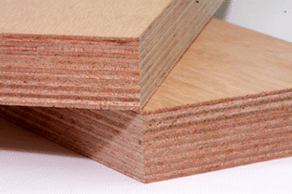
Plywood router bits shape, joint, and edge a panel made of thin veneer layers glued in opposite directions, and that layered structure is what makes routing plywood different from routing solid wood. The alternating grain chips at the edges, the glue dulls the cutter, and the thin face veneer tears if the bit or the feed is wrong.
Choosing the right plywood router bits and running them at the right speed turns a chipped, burnt edge into a clean, square one, and the difference shows on every shelf, cabinet, and trim piece the shop builds.
Plywood fights the cutter in three ways. The cross-lamination puts end grain against the bit on half the layers, the glue between the layers is abrasive and dulls the edge, and the thin face veneer lifts and chips if the bit grabs it.
Solid wood gives the router a consistent grain to follow, but plywood changes direction layer by layer, so the same pass that cuts one layer cleanly may tear the next. The router bit and the technique must handle that mixed grain.
Plywood also traps more glue and resin than solid timber. The residue builds on the cutter, heats the edge, and speeds the dulling, so a bit that lasts for months in hardwood may need cleaning and sharpening sooner in plywood.
Each veneer layer faces a different way, so the bit meets hardwood and softwood, end grain and face grain, inside a single pass. A compression bit or a down-cut bit manages that mix by shearing the edge in a controlled direction.
The face veneer is the most fragile part. It lifts at the panel’s exit edge, so supporting the cut with a backing board or a zero-clearance fence keeps the veneer intact.
Different jobs call for different cutters. A straight bit grooves and dados, a flush trim bit copies a template, a spiral bit shears the edge cleanly, and a profile bit shapes a decorative edge. The job picks the bit.
For plywood specifically, an up-cut spiral lifts the chips and can tear the top face, a down-cut spiral presses the top face down and protects it, and a compression bit combines both to cut a clean edge on the top and the bottom.
A mortising or a hinge bit suits the joinery that plywood cabinets need, and a chamfer or a round-over bit finishes an edge that would otherwise show the layered core. Each bit has a plywood-friendly version and a technique that gets the best from it.
The spiral bit gives the smoothest cut because the helical edge slices rather than chops. A down-cut spiral is the first choice for a visible face, while the straight bit remains the simplest choice for a shallow groove where the cut is not seen.
The compression bit is the premium option for a through cut, because it protects the top and the bottom veneer at once. A shop that cuts many plywood panels keeps one on hand for the edges that show.
Plywood wants a fast spindle speed and a steady, moderate feed. Run the router too slowly and the bit burns the face, run it too fast and the bit chips the veneer, and the sweet spot depends on the bit diameter and the panel thickness.
Take shallow passes on deep cuts. A single heavy pass loads the bit, heats the edge, and lifts the face veneer, while two or three light passes keep the cut cool and clean even in a thick panel.
Keep the router moving through the cut. Pausing lets the bit rub in one spot and burn the surface, and a burnt line will not sand out of a thin veneer without cutting through to the next layer.
Feed against the bit’s rotation for a clean cut, and watch the grain direction of the face veneer. Where the grain reverses, slow the feed or take a lighter pass to avoid the tear that the reversal invites.
Climb cutting, where the feed follows the rotation, gives a cleaner edge on the face veneer but pulls the router forward. Use it only where the setup is rigid and the cut is light, and never on a loose, unsupported panel.
Tearout shows at the panel edges and across the coarse layers. A sharp bit, a backing board, and a light final pass reduce it, and a down-cut or compression bit eliminates most of it on the visible face.
Burning comes from a dull bit, a slow feed, or a pause in the cut. Keep the bit sharp, keep moving, and clear the chips so they do not pack into the groove and pack against the cutter.
Chatter, or a rippled cut, comes from a loose setup or a bit that is too long for the job. Use the shortest bit that reaches, tighten the collet, and support the workpiece so the vibration cannot reach the cut.
A backing board under the panel supports the exit edge and stops the veneer from blowing out. A zero-clearance fence, where the fence opening matches the bit, does the same for a guided cut along an edge.
Both tricks cost little and save the panel. When the edge is visible and the veneer is thin, the support behind the cut is what separates a clean result from a ruined face.
Routers shape plywood edges that would otherwise show the layered core. A round-over or a chamfer softens the edge, a trim bit copies a curve, and a profile bit cuts a decorative mould for a shelf or a cabinet.
For joinery, a straight bit cuts the dados and the grooves that hold shelves and backs, and a dovetail or a rabbeting bit forms the joints that plywood cabinets use. Each cut needs a bit matched to the panel thickness and the joint.
Edge banding often follows the router work. After the profile is cut, the band covers the core on the exposed edge, so the routing and the banding work together to finish the panel.
A profiled edge looks best when the band matches the profile, so the maker chooses the bit and the band as a pair. A round-over edge takes a pre-glued band that follows the curve without lifting.
Where the plywood edge stays exposed, a chamfer or a round-over hides the layers and gives the panel a finished look without banding, which suits a utility shelf or a shop jig.
Clean the bit after every few panels, because the glue and resin that build on the cutter are what dull it fastest. A resin remover and a soft brush restore the edge without grinding the carbide.
Buy carbide bits for plywood, since the glue wears high-speed steel quickly. A few good bits in the sizes the shop actually uses beat a large set of cheap bits that dull and burn.
Store the bits in a case so the edges do not knock together, and rotate the cutters you use most so the wear stays even. A sharp, clean bit is the cheapest way to a clean plywood cut.
A bit that starts to burn or to tear the veneer is dull, even if the edge still looks sharp. Resharpen or replace it before it ruins a panel, because a dull bit costs far more in wasted material than a new cutter costs.
Keep a spare of the bits used every day, so a dull edge never stops the job. Swapping a bit mid-project keeps the cut quality even across the whole build.
The panel sets how well the bit performs. Commercial Plywood gives a consistent face that routes and joins cleanly, while Film Faced Plywood takes a profile on its tough face for a hard-wearing edge. Melamine Plywood routes a pre-finished panel for cabinets, MDF Board machines very smoothly for painted edges, and Chip Board covers the budget tier for concealed panels.
Suppliers such as HYY list the face grade and the thickness on the contract, so the buyer can order a panel that routes cleanly and holds the edge the design needs.
What router bit is best for plywood? A down-cut or a compression spiral bit gives the cleanest edge, while a straight bit handles grooves and dados where the cut is not seen.
Why does my router tear plywood? The cross-lamination and the thin face veneer tear when the bit is dull, the feed is wrong, or the exit edge is unsupported. Sharpen the bit and back the cut.
How do you stop a router burning plywood? Keep the bit sharp, keep the router moving, and take light passes so the cutter never rubs in one spot.
Can you use a straight bit on plywood? Yes, for grooves, dados, and rabbets. A spiral bit cuts a cleaner edge, but the straight bit is fine where the cut is concealed.
What speed should a router run on plywood? Plywood wants a fast spindle speed and a steady, moderate feed, adjusted for the bit diameter and the panel thickness.