Our Location
5th Floor, Huake Center, Lanshan District, Linyi City, Shandong Province, China

5th Floor, Huake Center, Lanshan District, Linyi City, Shandong Province, China
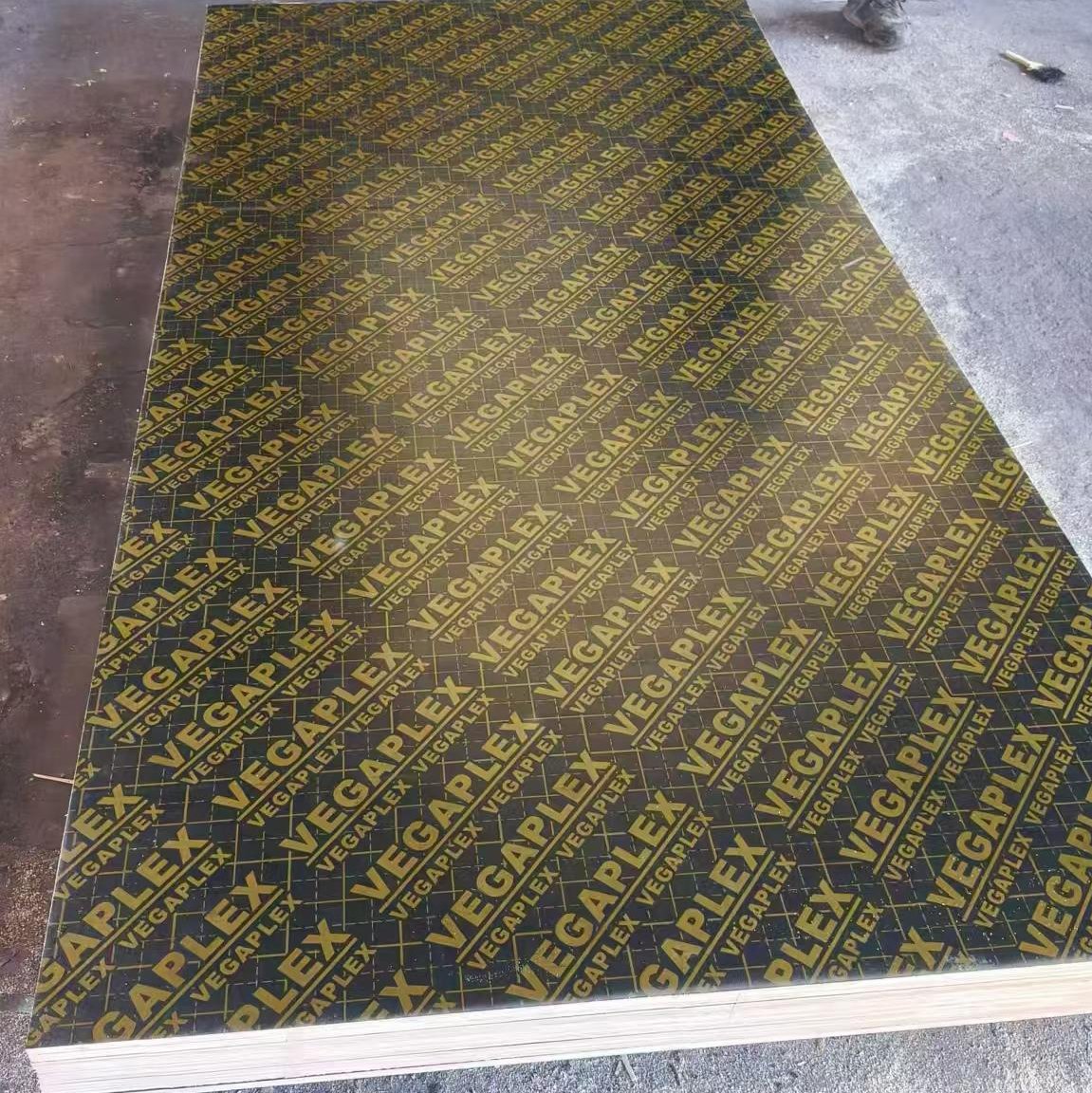
A film faced plywood supplier sells panels built for concrete formwork, so the buyer’s real risk sits in the film, the glue, and the core rather than the sheet price. This guide explains what the data sheet must prove, which factory documents justify the quality claims, and how to size an order that repeats cleanly at the job site. Use it before you compare quotations.
Formwork panels fail in three places: the film peels, the core swells, or the edges soak. Each failure traces back to a specification you can lock before shipping, which is why sourcing the factory matters more than chasing the lowest per-sheet number.
Film faced plywood starts as a cross-laminated veneer core bonded with a weatherproof adhesive, then receives a phenolic resin film on both faces and sealed edges. The film takes the punishment of wet concrete, high-pressure pours, and repeated stripping, which is why the product dominates concrete formwork, slab edge forms, and trench shoring.
The film weight decides how many reuses the panel survives. Buyers routinely specify film weights between 120 and 300 grams per square meter, with heavier films lasting longer on tough vertical pours. Check the film weight on the data sheet, because two panels that look identical can differ four-fold in expected surface life.
Core species and lay-up separate cheap panels from dependable ones. Hardwood and birch cores stay denser and stiffer, while softwood cores cut cost and cover lighter duties. Confirm the core species, ply count, and glue class in writing, then match them to the form pressure the design calls for.
Most formwork panels die at the edge rather than the face. Concrete slurry seeps into uncoated veneer edges during a pour, the core swells overnight, and the panel goes out of square by the third reuse. Seal all edges with the same phenolic system used on the face, and treat any field cut edge before the panel returns to the shuttering cycle.
A trustworthy data sheet answers the questions a site engineer asks before approval. If a factory cannot document these fields, the panel specs stay marketing claims.
| Data field | Why it matters |
|---|---|
| Film weight | Sets expected reuse and surface finish |
| Glue class | Gives the weatherproof bond that survives wet pours |
| Core species and ply count | Determines stiffness, weight, and panel stability |
| Moisture content | Predicts flatness and edge behavior in service |
| Reuse count range | Feeds the formwork cost per square meter |
| Dimensions and tolerance | Keeps formwork panels square and matching |
Read the reuse number as a range under controlled conditions, not a guarantee on every site. Panels reused thirty times in a clean shop can fail at ten on a brutal high-rise pour, so plan the buy-around around the worst-case job, not the marketing best case.
Collect the batch test report, the glue bond test, and the mill certificate with the quotation. A producer that keeps batch records answers fast when a panel fails, and that traceability separates a manufacturer from a trading house reselling random stock.
Every serious film faced plywood supplier runs the same core tests: glue shear, moisture content, film adhesion, and dimensional stability. The difference lies in whether the numbers appear on paper and whether the factory repeats the test per batch. A producer that publishes per-batch results turns quality control into a measurable contract term instead of a claim.
The supplier’s paperwork predicts its production behavior. Audits, sample orders, and shipping records tell you whether the factory can actually hold the specification across a full container.
Start with a sample panel or a small pilot container before you commit to a repeat program. A pilot order lets you test film peel, panel flatness, and squareness on your own site, and it gives the factory a chance to show its production discipline under real pressure.
Watch the rejection rate and the turnaround time on the pilot run. A factory that edits its data sheet to fit the complaint ships a corrected document fast, while a trading operation stalls on the details. Consequently, the pilot order tells you more about supplier quality than any brochure ever will.
Ask where the veneers are peeled, where the press sits, and who seals the edges. Real mills answer from the shop floor with dates and machine names; trading companies answer with distributor stories. Request a factory plan or a short production video, then confirm the batch records match the machines you were told about.
Formwork panels move in full containers, so the commercial terms shape the buying decision as much as the panel spec does.
Most mills quote a minimum order size and a production window measured in weeks, and the window widens during high-demand seasons. Match your stock plan to the mill calendar, and lock the delivery date in the contract so the site crew never waits for panels mid-structure.
Packing failures cause more field problems than panel defects in long-distance trade. A container that sweats for six weeks delivers swollen edges and moisture-content drift, so confirm the wrapping standard in writing before the loader closes the door.
Write the acceptance terms into the order instead of trusting a handshake. Reference the film weight, the moisture range, and the arrival inspection procedure in the contract, and specify how rejected panels get replaced. A written acceptance clause converts a disappointed conversation into a supply chain that enforces its own standards.
Sheets that cost more per panel usually cost less per pour. Divide the delivered price by the realistic reuse count, add the stripping and repair labor, and the cheapest sheet often loses the calculation. A forty-cycle panel at a higher price beats a fifteen-cycle budget panel on any busy concrete program.
Run the supplier through this checklist before you sign, and keep the answers in the file next to the contract.
Match the specification to the duty. Film Faced Plywood covers concrete formwork and heavy wet work, Commercial Plywood handles general structural panels, Melamine Plywood suits interior furniture faces, and MDF Board fills joinery cores. Suppliers such as HYY put film weight, reuse range, and edge sealing into the export contract, which lets you hold the factory to the agreed surface life from the first container.
How many times can film faced plywood be reused? Between ten and thirty pours depending on film weight, concrete mix, vibration intensity, and stripping care, so plan the buy-around around the toughest site conditions.
What is the difference between film faced and ordinary plywood? Ordinary plywood has no resin film, so wet concrete abrades the face and wets the core; the film protects both for repeated formwork service.
Does film faced plywood need edge sealing? Yes, unsealed edges absorb water and swell, which shortens panel life dramatically during repeated wet pours.
How long does a film faced plywood supplier take to produce a container? Most mills quote four to six weeks for a full container during normal seasons, and the window stretches in peak demand, so order ahead of the construction calendar instead of chasing the pour date.
Can the same panels serve flooring and formwork? Both need a weatherproof bond, but formwork panels also demand a stable film face, so stock separate grades where the duty differs.
What inspection protects the buyer at arrival? Measure thickness and squareness, check film peel on cut edges, confirm edge seal integrity, and compare the batch stamp and moisture content against the packing list.