Our Location
5th Floor, Huake Center, Lanshan District, Linyi City, Shandong Province, China

5th Floor, Huake Center, Lanshan District, Linyi City, Shandong Province, China
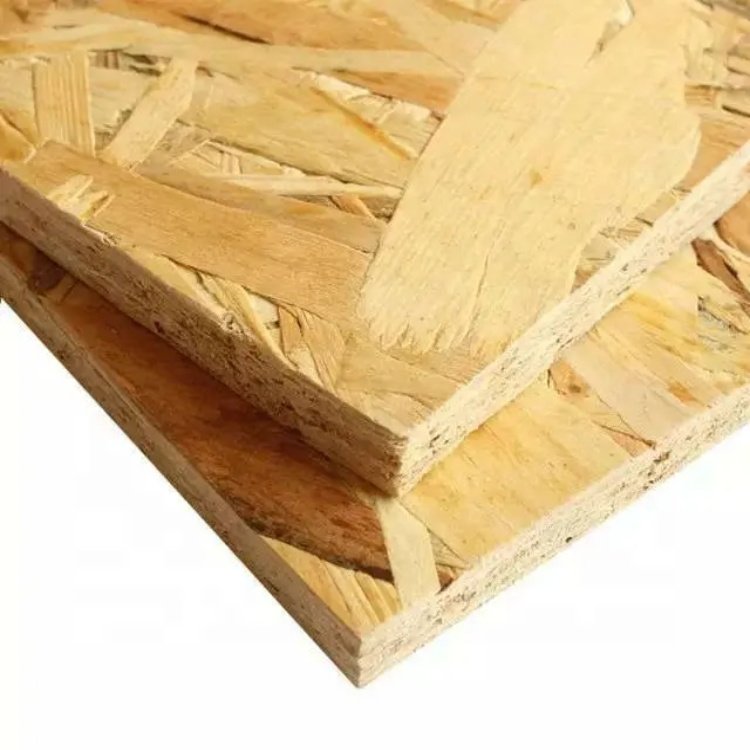
When an importer searches for plywood vs osb, the real question is not which panel is better but which sheet fits the job, the climate, and the shipping budget. This guide compares strength, moisture behavior, edge stability, fastener holding, and cost, then shortlists the specifications to confirm with a supplier before you order.
Both panels serve construction daily, but they fail in different places. Plywood usually fails through the face, while OSB fails at the edges, so the sheet that suits a dry interior deck may not survive a wet build site.
Plywood is a cross-laminated sheet built from thin veneers peeled off a spinning log. Manufacturers stack the plies so each layer runs its grain at right angles to the layer below, then bond them with adhesive under heat and pressure. That alternating grain direction gives the panel stiffness in both directions and strong resistance to splitting near fasteners and cut edges.
OSB, short for oriented strand board, takes a different route. Producers mix wood strands with wax and resin, arrange most strands in a deliberate direction, and press the mat into oversized sheets. The result weighs less and prices lower per sheet, but the strand structure changes how the panel behaves around water, edges, and screws.
The two materials travel through different trade routes. Structural sheathing buyers in North America routinely order OSB by the pallet from local panel plants, while plywood importers still depend on overseas veneer mills. As a result, availability, lead time, and minimum order volumes differ even though both products start as logs and end as full-size sheets.
Every panel order documents the same basics: thickness, bond class, face condition, and stamped rating. With plywood, buyers also confirm veneer grade and ply count; with OSB, they confirm strand alignment and thickness tolerance. Consequently, an experienced importer compares these written details before comparing list prices, because the cheapest sheet on paper rarely stays the cheapest after callbacks.
The glue line decides how either panel reacts to moisture. Interior panels use adhesives that tolerate dry indoor service, while exterior and structural grades carry fully weatherproof bonds that survive repeated wetting and temperature swings. Confirm the bond class in writing before you buy, because a panel that passes inspection at the mill can fail on site if moisture hits a weak glue line.
The table below compresses the factors that decide most orders. Read each row, then scan the notes that follow for the reasons behind the differences.
| Property | Plywood | OSB |
|---|---|---|
| Edge stability | Holds a clean edge when cut or routed | Rough edge that can wick moisture |
| Moisture tolerance | Exterior grades survive repeated wetting | Swelling appears at edges and fasteners |
| Fastener holding | Strong grip in face and edge | Good face grip, weaker edge grip |
| Surface quality | Smooth and ready to finish | Textured and fibrous |
| Weight | Heavier for the same thickness | Lighter sheets |
| Price per sheet | Higher | Lower |
Edge stability decides how a sheet survives handling, cutting, and the first rains. In contrast, OSB strands loosen at cut edges, and once water reaches the inner wafers, a panel can swell a visible amount within a single wet week. Veneer panels resist this because every ply forms a continuous surface across the edge of the sheet.
A lower OSB sheet price explains why large roof and wall jobs start with strand board. However, those same projects add expense for edge sealing, lapping tape, and dry-in scheduling, so the sticker price rarely equals the installed cost. Buyers who track the total cost often revise the panel choice after the first two job sites.
Fire behavior follows the same patterns: both panels burn once they dry out, so fire ratings depend on coatings and assembly, not the core. Warranty claims tell a clearer story. Strand board claims concentrate on edge swell and fastener pull-out, while veneer claims split across face defects and delamination, which makes inspection criteria for incoming stock different for each material.
OSB earns its place where panels stay dry after installation and no one needs a finished edge. That profile fits a large share of sheltered construction, which is why strand board dominates many regional markets.
First, confirm the panel carries a structural rating accepted by your local code. Next, schedule the dry-in so no sheet sits exposed for long. Finally, inspect edges on delivery, because an edge chip that looks minor in the yard appears as a swelling line on the installed deck.
Strand boards fail fastest at fastener holes, cut edges, and anywhere water pools. A roof crew that leaves a deck uncovered through one rain cycle usually discovers swollen edges that never recover, and the fix means full replacement rather than patching. If the schedule cannot guarantee cover, step the job to a veneer panel.
For interior work where a smooth face matters more than structural strength, some buyers step down to Chip Board at a lower price point. Chip board suits furniture backs, door cores, and shelving panels that live indoors, and it stays flat for years in low-moisture rooms.
Plywood wins where sheets must survive water, hold fasteners, or present a clean edge. Those three conditions cover most export orders, which explains why veneer panels still dominate international trade.
For roofs, floors, and concrete formwork, the veneer construction absorbs the abuse that strands cannot. Film Faced Plywood stands up to concrete pours and full rain exposure, while Commercial Plywood covers the general-purpose slot for walls, floors, and built-in furniture that does not need a decorative face.
A screw driven near a plywood edge still grips because plies run in two directions, while the same screw often splits an OSB edge. Paint and lacquer also lay smoother on veneer surfaces. As a result, joiners, formwork crews, and cabinet shops push back against strand boards the moment appearance or edge work enters the job.
Veneer panels develop a second life in pallets, hoardings, and temporary structures, which keeps their effective cost competitive. In contrast, wet strand board rarely earns a second use, because swollen edges make extraction and reframing uneconomical. That difference changes how buyers value the write-off at the end of a build.
Price dominates the conversation until a job goes wrong, so this section puts the numbers in perspective before you negotiate.
OSB lists cheaper per sheet and weighs less per square meter, which lowers freight on regional projects. However, import buyers discover that container freight narrows the weight gap, and the plywood price advantage appears in fewer callbacks, less waste, and fewer rejected sheets on moisture-critical work.
Veneer mills quote full containers, standard sizes, and fixed delivery windows, while strand plants fill spot orders from local inventories. Consequently, the panel that fits your supply window often beats the panel with the cheaper list price. Structure the order around the lead time you can actually hold instead of the shortest quote.
Regional shortages move both markets, but they swing differently. OSB prices react quickly to housing starts because strand plants run close to capacity, while plywood pricing follows veneer log supply and shipping rates. A buyer who understands these swings negotiates better on the quiet months and protects margins on the busy ones.
Score your next job against five questions and the panel picks itself.
If moisture or edges decide the answer, choose veneer. If price, weight, or a dry interior job drives the call, strand and particle boards can work. For finished furniture and cabinetry faces, MDF Board delivers the flattest paint base of the four panels, though it still needs protection from standing water.
For a repeat export order, ask the mill to put grade, bond class, ply count or strand orientation, and the stamped rating in writing, the way HYY issues every contract. Confirm the data sheet matches the local code before the container loads.
Is OSB as strong as plywood for sheathing? Yes for sheathing installed dry and within code spans, and no for sites where edges face weather. The honest answer is structural in both directions but moisture-critical only for strand board.
Will a single soak ruin an OSB sheet? One soak rarely ruins the sheet, but repeated wetting swells edges permanently, and the swelling never flattens out.
Can you screw into the edge of OSB? Edge screws hold poorly because the strands separate; face screws bite fine.
Which panel costs less to install overall? Strand board costs less to buy, but once you add edge sealing, dry-in protection, and waste from swollen sheets, the installed cost often closes the gap.
What should the export packing confirm? Ask for the face grade, bond class, ply count, size tolerance, and moisture content on the packing list, then verify a sample sheet before the container ships.